

"Why me?" Leaving the role of victim is a choice
We all have difficult moments in life: we have the power to decide whether these moments are meant to help us evolve or to plunge us into despair. We can't escape a difficult experience, but we are free to choose which reality we want to live in to build our present. By becoming aware of my freedom of choice and my limiting beliefs, can I improve my reality?
Why is this important?
A few days ago, I found myself with a box full of notebooks in which I had confided my emotions, my perceptions and my experiences in general. Writings from 2015 and 2016 allowed me to open a window into the past and rediscover that fearful woman lacking in self-confidence. But one of the things that surprised me the most was my immigrant complex, feeling that I didn't belong and that feeling different made me miserable. By reading these lines full of complexes, the woman of today began to understand the transformation that had taken place and that had never depended on others if not on herself. So what happened?
When I arrived in France in 2014, I wanted to mimic myself and speak French without any accent, bake pies, even though I'd never cooked with flour before, and show myself to be 'perfect' in professional and social exchanges, in other words: intellectual, serious and less spontaneous. At the end of the day, of course, I was full of stress and absolutely tired of playing a role that didn't suit me. I felt out of place, sad and above all a victim of my circumstances: why me?
What you need to know
According to Marian Rojas Estapé, Psychiatrist at the University of Navarra and author of the book "Como hacer que te pasen cosas buenas", (How to make good things happen to you, Editorial Planeta 2018), we all seek happiness, and this quest occupies us throughout our lives. What usually happens is that we make mistakes along the way, we look where there is none, we get distracted, we let ourselves be dazzled by mirages. We often confuse pleasure with happiness and, in my case, external acceptance with self-esteem. I didn't accept the person I was, I preferred to lose myself between people to feel accepted, but not necessarily loved by others or myself.
This produced a lot of stress in me and cortisol (the brain's neurotransmitter) was constantly coursing through my bloodstream. Cortisol is a hormone which, in small doses, helps us to survive and be creative in times of stress, but which, if maintained over time and on a chronic basis, makes us ill and ruins our health.
According to Marian Rojas Estapé, the four attitudes that most increase cortisol are :
- chronopathy, i.e. the disease of wanting to be constantly efficient and optimising time ;
- Fear of losing control, especially of the future,
- perfectionism, which makes people suffer because they never live up to their own expectations
- and screens, which keep us constantly on the alert: an e-mail, a notification, a call, constant distractions, etc.
When I arrived in France, being noticed, differentiated and even judged because I spoke with an accent was enough to make me feel imperfect and unhappy. Being different was, in my mind, synonymous with being defective, unsuitable and incapable. The constant victim in me fed on my constant stress and inability to see beyond my limiting beliefs.
Creating my reality
I've been lucky enough to teach yoga for over fifteen years. Thanks to a very good friend, I dared to give yoga classes in French shortly after arriving in France.
And for me, yoga and spontaneity go hand in hand, the quest for perfection in the postures or my way of speaking had to give way to a profound and honest transmission to my students.
Over time, I began to notice that little by little the sessions were filling up with new people. That word-of-mouth was filling up my sessions much faster than I could ever have hoped. In the space of a few months, I went from having three girlfriends to having more than twenty people practising regularly in a small local hall.
During yoga practice, I allowed myself to be myself: although my Spanish accent was more pronounced than ever, I allowed myself to touch people physically with gentleness and love. And I took the time I needed to connect with each practitioner, by laughing, playing or making jokes: I was finally myself.
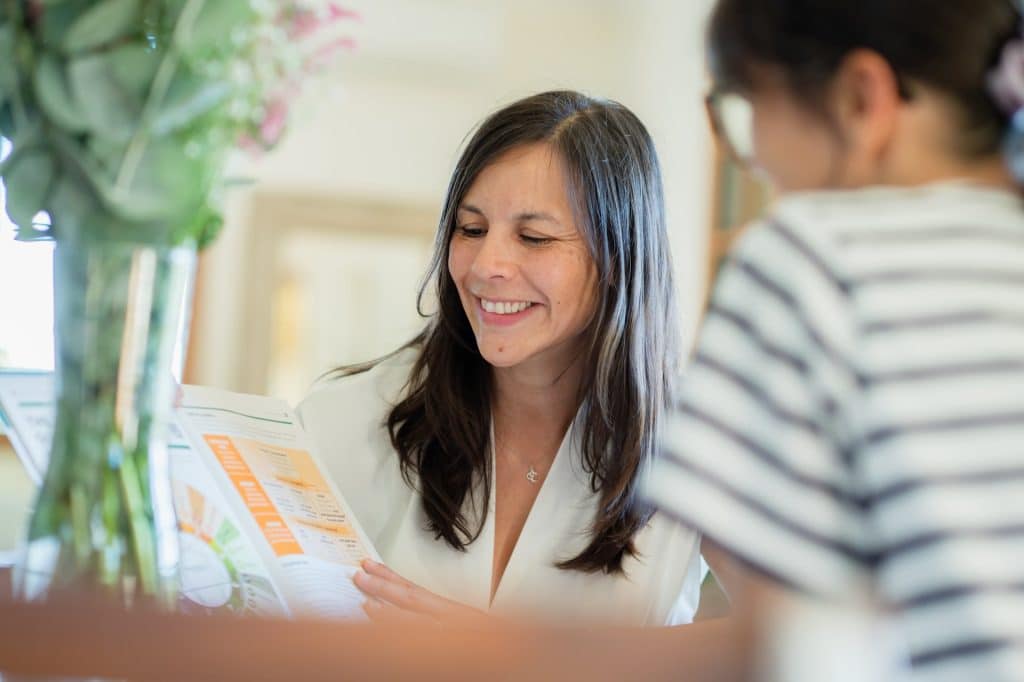
With this authenticity, I attracted more and more people around me.
This spontaneity also affected my work, where I took the liberty of playing with words with a smile to get people out of their headaches and thus be able to co-create with the other person a pleasant moment of pure connection… more substance than form.
The 3 factors that create reality
According to Marian Rojas Estapé, it helps us a lot to know "that we are the sum of what others see of me, what I think I am and the truth about myself. What is relevant is not reality, but the way in which I interpret reality", and to do this, as Marian explained, we must :
- To have a belief system that is not limiting; in my particular case, to stop thinking that being different is a negative factor or that by being myself I'll never be loved.
- A second factor would be mood, which is crucial and depends on many factors, such as sleep and biochemistry. I noticed that when I was happy after the yoga sessions, my nights of sleep were better and I had even rediscovered little moments of good humour during the day which, over time, naturally continued.
- The Ascending Activating Reticular System (RAAS) would be the third element: this system is located in the brain stem and Rojas Estapé describes it as a 'brain tracker'. This is the system which, when we have hope, helps us to find what we want in real life. For example, when a woman is pregnant, the number of babies she sees in the street is multiplied. If someone is looking for a flat, they start detecting opportunities for houses for sale on every street front. "That's why it's said that what the heart desires helps to focus attention on the good things that happen to us; what happens is that, generally, we can distract them, for example with screens. To combat this, we need willpower and to be "masters of our heart".
This last one is the most interesting for me, because thanks to my collective yoga practice, I began to attract people and situations that reinforced my optimism and my desire to be myself. I focused more on the positive things that I could bring to the people around me rather than on the things that were missing to be 'perfect' one day.
I know I'm always different, but who isn't in their own way? We're all different, and accepting that and making the most of it in the service of others is an inspiring force that allows me to continue to smile and live freely, without the weight of my childhood limiting beliefs. I realised that, in the end, being different was a strong point for connecting with others, at least from the reality I had decided to create.
From Victim to Creator
My circumstances hadn't changed, it was my attitude that was different. Creating my reality was entirely up to me and releasing the tension of wanting to be perfect or invisible allowed me to see my role as creator of my life more clearly. I still often have moments of confrontation and pain, especially when you're a mother of teenage children and a proud representative of women in their forties; but as Marian Rojas Estapé says "optimism is a decision" and I decide every day, with every cup of tea, every walk with the dog, every accounting problem to be responsible for my decisions and to remain optimistic. My Ascending Activating Reticular System is well aware of this 😉
Links and Resources
- http://www2.haciendotepreguntas.com/es-el-momento-de-volver-a-dar-vida-a-nuestras-ilusiones.html
- https://marianrojas.com/
- https://psicologiaymente.com/neurociencias/sistema-reticular-activador-ascendente
- https://www.youtube.com/watch?v=4v5bIPUzgrg
- https://www.lavanguardia.com/vivo/psicologia-salud-mental/20230523/8987378/hormona-estres-como-afecta-cortisol-nuestro-bienestar-emocional-pvlv.html
Ouvrages :
- Rojas-Estapé, Marian. ¿Como hacer que te pasen cosas buenas? Editorial Planeta, 2018
- Rojas Estapé, Marian. Encuentra tu persona vitamina. Edtorial Espasa, 2021.
Podcast:
https://open.spotify.com/show/2xV7Vx7NQgAC8vMt2vZNnE